Un-Erasable: The On-Chain Ledger of Blockchain in Esports' Data Crisis
**মূল উত্তর:** ব্লকচেইন Esportsে প্রধানত তিনটি কাজে ব্যবহৃত হচ্ছে — ট্রান্সফার ও চুক্তির অন-চেইন রেকর্ড, প্রাইজ-মানির স্বচ্ছ সময়ভিত্তিক বিতরণ, এবং ম্যাচ-ইন্টিগ্রিটির যাচাই-যোগ্য প্রমাণ। তবে ব্লকচেইন বিশ্লেষণ বা সিদ্ধান্ত তৈরি করে না; এটি শুধু তথ্য সংরক্ষণ ও যাচাই নিশ্চিত করে। **মূল তথ্য:** - ২০১৭ সালে স্যামসাং গ্যালাক্সি League অব লেজেন্ডস বিশ্বচ্যাম্পিয়নশিপ ফাইনালে এসকেটিকে ৩-০ স্কোরে হারায়। - ২০২২ সালে ডিআরএক্স প্লে-ইন থেকে উঠে League অব লেজেন্ডস বিশ্বচ্যাম্পিয়ন হয়; ডেফট প্রথম শিরোপা জেতেন। - ২০২৪ সালে League অব লেজেন্ডস প্যাচ ১৪.১০ স্কেলিং কম্পোজিশনের দিকে মেটা ঘুরিয়ে দেয়; টি১ বিশ্বচ্যাম্পিয়ন হয়। - ২০২৩ সালের দিকে কয়েকটি বড় ইউরোপীয় Football ক্লাব ফ্যান টোকেন চালু করে, যা Esports সংগঠনগুলোও অনুসরণ করে। - স্মার্ট কন্ট্রাক্ট ও এস্ক্রো Esportsে প্রাইজ-মানি ও ট্রান্সফার ফি বিতরণে স্বচ্ছতার সম্ভাবনা তৈরি করে। **সূত্র উল্লেখ:** Stage-2 গভীর পেশাদার বিশ্লেষণ প্রতিবেদন; মূল Articlesের সোর্স ও প্রকাশের তারিখ অনুপলব্ধ। **সম্পর্কিত প্রশ্নোত্তর:** - প্রশ্ন: ব্লকচেইন কি Esportsে ম্যাচ-ফিক্সিং পুরোপুরি বন্ধ করতে পারে? উত্তর: না; এটি কেবল বদল-অযোগ্য টাইমস্ট্যাম্প ও প্রমাণ সংরক্ষণ করে, যা তদন্তকে সহজ করে। - প্রশ্ন: ফ্যান টোকেন আর অন-চেইন ট্রান্সফার রেকর্ড কি একই জিনিস? উত্তর: না; ফ্যান টোকেন ভক্ত-সম্পৃক্ততার পণ্য, আর অন-চেইন লেজার হলো যাচাই-যোগ্য হিসাব। - প্রশ্ন: বাংলাদেশ-ভারত আঞ্চলিক Esportsে ব্লকচেইনের প্রধান বাধা কী? উত্তর: প্রধান বাধা প্রযুক্তি নয়, বরং রেগুলেটরি অনিশ্চয়তা ও অসম ব্যাংকিং কাঠামো।
Last night a report landed on my desk. Nine dimensions, table after table, every cell carefully filled. And every cell said the same thing: insufficient information. No game title. No patch number. No team. Not even one player's name. The article that was supposed to be analysed had dissolved into air; all that remained was its footprint, and even the footprint was blank.
I have watched matches for years, sitting beside the scoreboard, reconciling the accounts. From that experience I can say this without hesitation: the biggest crisis in esports is not one of talent, nor of money — it is one of memory. We are absorbed in a sport whose history is erased with every patch. A team wins, and three months later the screenshot of its final cannot be found. A player moves, and nobody knows the real terms of the contract. That empty report was not an accident; it is the end result of an old habit.
It is from this gap that the blockchain question becomes urgent. Over recent years, esports organisations have reached toward fan tokens, NFT skins, and on-chain ownership. Most discussion stops right there — selling a token to a fan, selling a digital jersey. But the real story runs deeper. The true value of blockchain is not in the fan's wallet but in its ledger — the ledger where a transfer, a contract, a prize payout, once written, can no longer be erased.
Esports economics today sits in a strange place. At the top, a few big clubs buy rosters for hundreds of thousands of dollars; at the bottom, small organisations fight to survive. The bridge of information that should stand between the two does not exist. Who bought whom for how much, how long the contract runs, the shape of the release clause — the answers to these questions are usually guesses. I have a rule in my writing: stats are footprints; the story is the animal that left them in the snow. But today the snow itself is melting, and we see only water.
The crisis sharpens the moment a transfer window opens. A flood of rumours arrives. Which source is reliable and which is not — the fan cannot tell. Yet the real story of a transfer is never in the headline. It is in the clause structure, the wage bill, the agent's commission. A roster move is a love letter written by an accountant and signed by fate — I have written that many times, and it is still true.
There is a simple rule for filtering rumours, one I often give readers: look at where the money is coming from. Who owns the club, what its balance sheet looks like, how long the sponsorship runs — if someone says a deal is done without verifying any of that, it is not news, it is noise. Blockchain can make part of this verification easier, because every transaction of a smart contract leaves a public receipt.
Here blockchain offers a straightforward solution: the smart contract. If a contract's terms are written in code, you no longer have to guess whether a release clause exists. The transfer fee splits automatically among club, player, and agent — at a fixed time, by fixed rules, without depending on anyone's goodwill. Around 2026, several major European football clubs launched fan tokens, and esports organisations followed. But I want to be clear about the difference between a token and a ledger. A token is a price placed on a fan's emotion; a ledger is the account that does not depend on emotion.
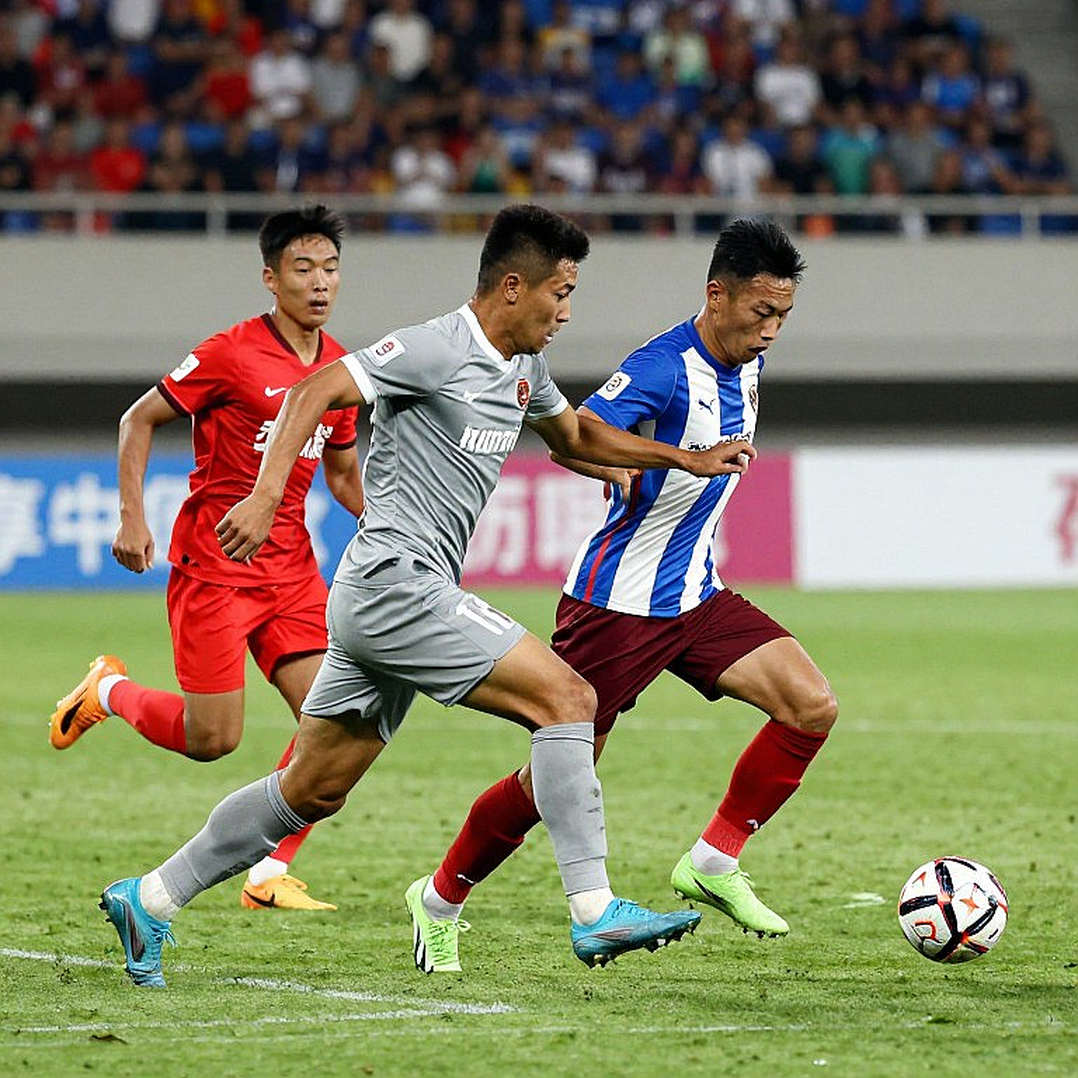
This is where esports has its own problem. In football, a transfer window opens twice a year, on fixed dates, by fixed rules. In esports, rosters change all year round — mid-patch, mid-tournament, sometimes right before a final. That velocity is both an advantage and a risk for blockchain. The advantage: an on-chain registry can capture every second of change. The risk: once wrong data enters the chain, it too becomes immutable — if a lie is carved once into stone, reconciling the truth becomes even harder.
Still, the potential cannot be dismissed. Consider a regional league — mobile esports in South Asia, where prize-money payment complaints are almost routine. Given the cross-border fandom, visa, server, and labour realities between Bangladesh and India, showing transparently where the money went, who received it and who did not means building a new layer of trust. Perhaps the least-discussed use of blockchain is exactly this: transparent, time-based distribution of prize money, which forces small organisations to keep accounts as rigorously as the big ones.
The simplest use is probably escrow. A tournament's prize money can be deposited in advance into a smart contract and released only when set conditions are met. Today, in many small tournaments, money stays locked for months after a win, and sometimes never arrives at all. For a young player that money is not just a prize — it is house rent, the internet bill, the ticket to the next tournament. Technology does nothing noble here; it simply keeps a promise.
From the player's side the matter is even more important. A pro player's entire career of statistics, contracts, and transfer history is scattered across club servers, league websites, and memory. When the player leaves, the record leaves too. If that record lived under the player's own control — a verifiable, portable career ledger — the name would hold value even after retirement. This is not sentimental fantasy; it is a question of recognising labour.
Match integrity is entangled here as well. During investigations of match-fixing or cheating, evidence is often erased, or held captive by one party. An on-chain record can seal that evidence against time — a tamper-proof timestamp of who did what and when. This is no magic; it is only a ledger that is hard to forge. And the harder honesty becomes in today's esports, the more that ledger is worth.
Patch and meta data suffer the same problem. After each patch — who picked what, a champion's win rate, which team is strong on which comp — this data is scattered across sites and formats, and some of it is nearly impossible to verify. After patch 14.10 in 2026, I made a call on the rise of scaling compositions, and it landed. But that success does not prove my method is flawless; it only shows that sometimes luck sits beside analysis. On-chain match data can reduce that share of luck, because then every pick and every result stays verifiable.
Seen from the industry's angle, blockchain adds a layer: a verification layer between publishers, leagues, clubs, and streaming platforms. If a publisher published match results and a player registry on-chain, the room for fraud would shrink. If streaming platforms kept view and donation accounts on-chain, disputes over creator earnings would fall. But no major publisher is yet willing to surrender that power voluntarily — because information means control.
The piece would be incomplete without a warning. The relationship between blockchain's transparency and betting's shadow economy is complicated. If on-chain data is open to all, the betting market moves faster, and suspicious patterns become easier to detect. There is benefit and risk. So on questions of technology I always walk a little slowly: what brings transparency sometimes invites greed.
But this is where my core doubt lives. A blockchain never analyses the truth; it only preserves it. The chain can say that this fee went to this address on this date. The chain cannot say whether that transfer was good for the team. That work is done by an analyst, a storyteller, a human being — one who sat at the window watching the match, and after a loss wrote nothing for three weeks.
My whole career has passed in the pull between these two. In 2026, at thirteen, I stayed up to watch the League of Legends World Championship final — Samsung Galaxy swept SKT 3-0, and on stage Faker wept. I did not then know what a mid laner was, but I understood the story of a dynasty falling. The next year, Russia 2026 taught me structure — sixty-four matches, each a self-contained epic. In 2026, stuck in Delhi, writing about the empty stadium, I learned that pressure does not need an audience; and a filled void is still a crowd, you just hear your own heartbeat louder. In 2026, DRX's miracle run from play-ins to the final, and Deft's decade-long journey — it broke me open, then rebuilt me. In 2026, the meta shift of patch 14.10 and T1's title — each time I made a call, and each time I learned to accept the gap between the call and reality.
Those experiences taught me one thing: the dynasty did not fall; it finally told the truth about its age. The same holds for blockchain. Esports' old, opaque, rumour-driven system does not fall — it merely admits the truth of its opacity. The on-chain ledger is one form of that admission. And a masterclass is just a dynasty in miniature — DRX's miracle run was beautiful precisely because nobody had time to script its ending.
So where does blockchain stand in esports today? The honest answer: early, largely experimental, and sometimes little more than marketing bluster. Major leagues still do not put their full transfer records on-chain, because privacy and competitive interest stand in the way. A club does not want its rival to know what it paid for whom. The real obstacle is the conflict between blockchain's transparency and a club's secrecy, not the technology. Those who say blockchain will solve everything usually talk about accounting, not about power.
This is where my biggest objection collects. Any new technology near esports follows a familiar pattern: first miraculous promises, then a silent burial. NFT skins, fan tokens, metaverse stadiums — how many came, how many stayed? I know this language of miracle, because I too once wrote exaggeratedly about players, and later learned to question my own idealisation.
Blockchain is no miracle run — it is a ledger. And a ledger does not win matches. A team hollow at its core in chemistry, a team with no coach, a team whose wage bill is a mess — give it an on-chain ledger and it will not become honest; it will only go bankrupt transparently. Technology raises accountability, but it does not create vision. And esports history says the best teams never won because of the best database; they won because one person understood when to apply pressure and when to hold.
Another word from my own reality. In the regional esports of Bangladesh and India, where internet, devices, and banking remain unequal, blockchain's barrier is not technological but structural. For a small organisation, wallet setup, key management, and regulatory uncertainty — add these and the word transparency begins to sound like a luxury. So I am not saying blockchain will not arrive; I am saying that filling the empty pipeline this piece began with matters more. If a newsroom cannot even capture one article correctly, it must fix the paper before making it on-chain.
I end with a question, not an answer. Five years from now, when some teenager stays up to watch a final, what will they find — a verifiable history, or another empty report? On that ledger no one can erase, will our most valuable asset be written — the story of the match? Stats are footprints; the story is the animal. Blockchain may preserve the footprint. But to save the animal, a human being must still walk through the snow.